
1- Introduction
The United Community Foundation is dedicated to ensuring a secure and enjoyable sports and recreational experience for youth. The current policy aims to define the parameters of safe sports activities for young individuals and to provide recommendations on creating a secure environment for children’s sports participation. The foundation has established regulations, including a Code of Conduct and Fair Play, for all its members. This Code offers broad guidelines on the appropriate and inappropriate actions of players, coaches, officials, parents, and supporters.
In the context of this policy and its related processes, the term ‘children’ or ‘young people’ refers to individuals who are below 18 years of age.
What does a safe sport mean for children?
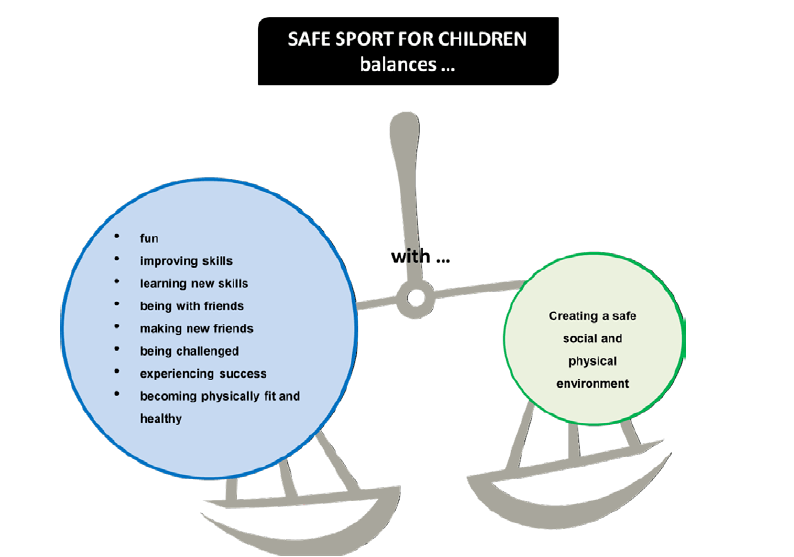
Ensuring safe sport for children involves creating a balance between their desired outcomes from sports activities and protecting them from harm that may arise from negative social or physical environments. Children seek an environment that is secure and nurturing, where they are motivated to excel and simultaneously enjoy their participation. Research has shown that children’s enjoyment diminishes in scenarios where:
- Winning is excessively prioritized by parents or coaches.
- Only top players get regular opportunities to play, leaving others sidelined.
- Certain participants receive preferential treatment.
- They experience strained relations with the person leading or supervising.
- They are unable to join in with their friends.
- There is a fear of injury.
- They feel unsafe in their environment.
- Fun aspects of the sport are not emphasized.
- They perceive a lack of progress or skill development.
2- Policy Pledge, Principles and Objectives
Policy Pledge
The United Community Foundation recognises and pursues the responsibility to promote safety, and protect children from harm and exploitation. Staff and volunteers will do this by working together to ensure a safe environment for children participating in our programmes and adhering to the principles and guidelines of this Policy.
Policy Principles
In implementing this policy we are committed to the following principles:
1. Young people have a right to participate in sport and recreation that is safe,
2. Children should feel respected, valued, and encouraged to enjoy their participation and to reach their full potential
3. We have a duty of care when it comes to children. We take steps to ensure that children can participate safely in the activities we provide.
4. We will work in partnership with children, parents and carers, to promote the welfare, health and development of children.
Policy Objectives
The aim of this policy is to:
- promote the health and welfare of children by providing safe sport and recreational activities
- respect and promote the rights, wishes and feelings of children
- promote and implement appropriate procedures to safeguard the well-being of children and protect them from harm
- commit to recruiting, training, supporting and supervising staff, members and volunteers to adopt good practice to safeguard and protect children from harm, and to reduce the risk of allegations or complaints against themselves
- educate children, staff, members and volunteers to adopt and abide by this Child Protection Policy
- promote the collective responsibility within our activities for ensuring safe sport for children.
- commit to responding to allegations of misconduct or harm to children in line with this Policy and these procedures, as well as implementing, where appropriate, the relevant investigative, disciplinary and appeals procedures
- regularly monitor and evaluate the implementation of this Policy and these procedures.
3- Good Practice for Working with Young People
The following protocols provide guidance to our staff and those working with children by outlining good practice and establishing boundaries in a range of situations. The intention of these protocols is to reduce the likelihood of harm to a child, as well as minimizing the risk of an allegation or complaint being made.
A. Applying a child-centred approach where all children are treated equally and with dignity
- Activities should be appropriate for the age and development of the children.
- Ensuring feedback to children is about their performance and not of a personal nature.
- Using positive and age-appropriate language when talking to children and in their presence.
B. Creating a safe and open working environment that reduces risk to staff and volunteers
- Exercise common sense.
- Do not send children off to train alone and out of sight or supervision.
- Ensure that children use appropriate protective gear.
- Ensure that all physical contact with children is relevant and appropriate to the activity.
- Seek permission to touch when doing the above.
- Do not engage in any intimate, over-familiar or sexual relationships with people under the age of 18 years.
- Ensure that any filming or photography of children is appropriate.
- Explain the purpose and obtain consent from parents or caregivers prior to filming or photographing children.
- Request parental consent before transporting children in a vehicle. Ensure that the vehicle is insured and has a current Warrant of Fitness and registration.
- Do not drink alcohol in the presence of children and do not offer alcohol to children under any circumstances.
- Do not engage in communication with a child, on a one-on-one basis, through social media, texting or email, other than for relevant coach/athlete feedback or administration.
- Do not allow parents, coaches, other children, or spectators to engage in any type of bullying behaviour (this includes cyber/text bullying).
- Do not bully or place unnecessary pressure on young people.
C. Avoiding situations where staff or coaches are alone with a child
- Avoid private or unobserved situations, including being alone with a child in the changing rooms. Have another adult present or at least another player.
- Avoid entering changing rooms. If you must enter, knock and announce yourself and try to have at least one other adult with you.
- Avoid driving a child unaccompanied. If this is unavoidable, have them sit in the back seat.
- Do not invite or encourage children to your home.
- Always have another adult present when staying overnight anywhere with children.
- Do not share a room with a child that is not your son or daughter.
- Travelling creates higher-risk environments. Take extra care to ensure players and volunteers are not exposed to undue risk.
Code of Conduct
The United Community Foundation has adopted the Code of Conduct which has been developed by Sport New Zealand, for its participants, volunteers and staff. This Code of Conduct has the following rules for all relevant parties:
Administrators:
I will:
- create pathways for club members to participate not just as players but also as coaches, referees, administrators etc.
- ensure that rules, equipment, length of games and training schedules are modified to suit the age, ability and maturity level of players.
- ensure quality supervision and coaching for players.
- remember that players participate for their enjoyment and benefit.
- help coaches and officials highlight appropriate behaviour and skill development, and help to improve the standards of coaching and officiating.
- ensure that everyone involved in sport emphasises fair play.
- distribute a code of conduct to players, coaches, officials and parents and encourage them to follow it.
- respect the rights, dignity and worth of all people involved in the game, regardless of their gender, ability or cultural background.
- promote adherence to anti-doping policies.
I will not:
- arrive at the venue intoxicated or drink alcohol at junior matches.
- allow the unlawful supply of alcohol at training, games or club functions.
- use bad language, nor will I harass players, coaches, officials or spectators.
Coaches:
I will:
- remember that players participate for enjoyment and winning is only part of the fun.
- never ridicule or yell at players for making a mistake or not winning.
- be reasonable in my demands on players’ time, energy and enthusiasm.
- operate within the rules and spirit of the game and teach my players to do the same.
- ensure that the time players spend with me is a positive experience. All players are deserving of equal attention and opportunities.
- avoid overplaying the talented players and understand that the average players need and deserve equal time.
- ensure that equipment and facilities meet safety standards and are appropriate to the age and ability of all players.
- display control, respect and professionalism to all involved with the sport including opponents, referees, coaches, officials, administrators, the media, parents and spectators. I will encourage my players to do the same.
- show concern and caution toward sick and injured players and follow the advice of a physician when determining whether an injured player is ready to recommence training or competition
- obtain appropriate qualifications and keep up to date with the latest coaching practices and the principles of growth and development of young players
- respect the rights, dignity and worth of all people involved in the game, regardless of their gender, ability or cultural background
- promote adherence to anti-doping policies.
I will not:
- arrive at the venue intoxicated or drink alcohol at junior matches.
- allow the unlawful supply of alcohol at training, games or club functions.
- use bad language nor will I harass players, officials, spectators or other coaches.
Officials:
I will:
- place the safety and welfare of players above all else.
- show concern and caution towards sick and injured players.
- be impartial, consistent, objective and courteous when making decisions.
- accept responsibility for my actions and decisions.
- condemn unsporting behaviour and promote respect for the individuality of players.
- avoid any situations which may lead to or be construed as a conflict of interest.
- be a positive role model in behaviour and personal appearance and ensure my comments are positive and supportive.
- be a good sport as I understand that actions speak louder than words.
- always respect, remain loyal to and support other officials.
- keep up to date with the latest ‘Laws of the Game’, trends and principles of their application.
- refrain from any form of personal abuse towards players or other officials.
- respect the rights, dignity and worth of all people involved in the game, regardless of their gender, ability or cultural background.
I will not:
- arrive at the venue intoxicated or drink alcohol at junior matches.
Parents:
I will:
- encourage my child to play within the rules and respect officials’ and coaches’ decisions.
- teach my child to respect the efforts of their opponents.
- remember that children learn best by example so I will applaud good plays/performances by both my child’s team and their opponents.
- give positive comments that motivate and encourage continued effort.
- support my child’s efforts and performance.
- thank the coaches and other volunteers who give their time to conduct the event for my child.
- help when asked by a coach or official.
- respect the rights, dignity and worth of all people involved in the game, regardless of their gender, ability or cultural background.
I will not:
- pressure my child in any way – I know that this is their game not mine.
- I will not arrive at the venue intoxicated or drink alcohol at junior matches.
- use bad language, nor will I harass players, coaches, officials or other spectators.
- criticise or ridicule my child’s performance after the game.
Players:
I will:
- always play by the rules.
- never argue with an official. If I disagree with a decision I will inform the captain, coach or manager during a break or after the competition.
- control my temper. I understand that verbal abuse of officials and other players or deliberately distracting or provoking an opponent is not acceptable or permitted behaviour in any sport.
- work equally hard for myself and my team.
- be a good sport and applaud all good plays whether they are made by my team or the opposition.
- treat all players in my sport as I like to be treated. I will not bully or take unfair advantage of another competitor.
- cooperate with my coach, team mates and opponents.
- display modesty in victory and graciousness in defeat.
- participate for my own enjoyment and benefit, not just to please parents and coaches.
- respect the rights, dignity and worth of all participants regardless of their gender, ability, cultural background or religion.
- thank the opposition and officials at the end of the game.
- comply with anti-doping policies.
I will not:
- arrive at the venue or play sport while intoxicated
4- Recruitment and Training Processes for Staff and Volunteers
The United Community Foundation upholds a duty of care to ensure the safety of children by recruiting only suitable staff and volunteers. This involves implementing a straightforward yet effective recruitment process that incorporates thorough screening measures, including police vetting. This practice is integral to maintaining a safe and trustworthy environment for children under UCF’s care.
Recruitment Process:
1. Creating role descriptions:
A comprehensive job descriptions makes it easy to find the right type of staff and volunteers. The role description would outline the purpose of the role, what is involved, and the desired skills and experience. This also helps recruitment by providing a clear role scope and dispelling any insecurities volunteers might have about not having the skills, or concerns they’ll end up over-committed.
2. Interviewing candidates
Short interviews with staff or volunteers help communicate clear expectations about the role and the type of person the appropriate candidate is likely to be. It is a chance to share information, ask and answer questions, and emphasise the organisation’s Child Protection Policy.
3. Follow up with the candidate’s referees.
Candidates must provide contact details of at least one referee who can be contacted to discuss their suitability for the role. This is particularly important for roles that potentially carry a higher risk.
4. Screening applicants – police vetting
Police vetting is part of the screening process, but this should not constitute the Foundation’s complete response to keeping children safe. Police vetting will provide the Foundation with a judgement about a person’s suitability to work with children based on the information it holds – this should be considered a ‘red flag’ rather than detailed information.
Roles and Responsibilities
Appointment of Child Protection Officer: The United Community Foundation has appointed Mrs. Elham Karimi as its Child Protection Officer. The main responsibilities of this role are as below:
- ensuring that child protection procedures are understood and adhered to by all members
- organising promotional activities and training, and raising awareness within the organisation
- establishing and maintaining the complaints procedure
- reporting to the Board, Executive, Committee, or Management as appropriate
- acting as the main contact and support for child protection matters
- keeping up-to-date with developments in child protection legislation
- liaising with local child-protection agencies as required
- maintaining confidential records of reported cases and any action taken
- regularly monitoring and reviewing existing policies and procedures.
Education and Training of Staff and Volunteers
In addition to the pre-selection checks, the Foundation will make sure the child protection process includes subsequent monitoring and training of staff and volunteers in order to:
- ensure that staff and volunteers are working safely and effectively with children.
- identify and respond to any unacceptable behaviour or practices of staff and volunteers.
- enable staff and volunteers to analyse their own behaviour and practices, and compare them against the Code of Conduct and Good Practice Guidelines – this helps minimise the risk of allegations or complaints against that person.
- respond in a positive way to concerns raised about staff or volunteers i.e. via training to improve practices.
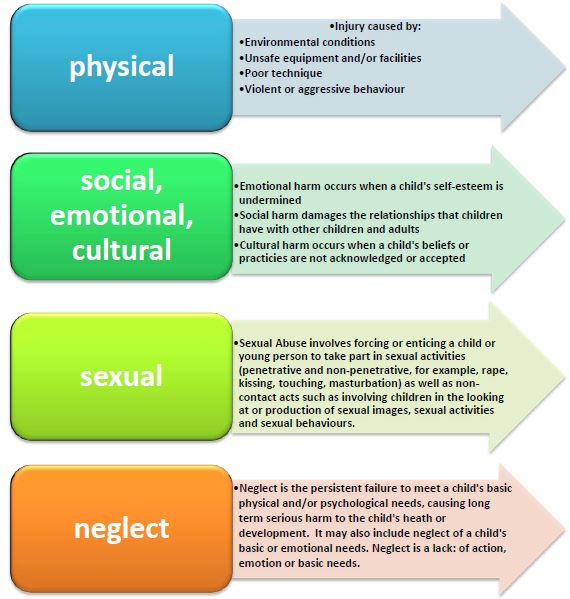
All new staff and volunteers will be given a copy of this Child Protection Policy so that they will be able to demonstrate an understanding of the Code of Conduct, Good Practice and types of harm.
5- Misconduct, Complaints and Investigative Process
The United Community Foundation and its staff, coaches and volunteers will be prepared to deal with the following situations:
- What happens when a child discloses that harm has occurred and what is the appropriate way to respond?
- When should reported or suspected concerns be brought to the attention of the Child Protection Officer or Board?
- What happens when the policy is breached or good-practice guidelines are not followed?
- What investigative process should be followed when an allegation or complaint is made or harm has occurred?
- Where harm, in the form of physical or sexual abuse, is suspected or reported, what process is set to help deal with this.
Definition of misconduct?
Misconduct occurs when a code of conduct is breached. Serious misconduct occurs when there are serious or repeated breaches of the code of conduct. When dealing with misconduct there is an escalating scale of options that could be employed. These range from bringing the breach to the attention of the person involved and agreeing ways to avoid this happening again through to formal disciplinary action and ultimately dismissal, or involvement of the Police and/or Child, Youth and Family.
Addressing Concerns over Poor Practice, Allegations and Complaints
Where concerns about poor practice or breaches of codes of conduct are identified or reported, proactive action should be taken to reduce the risk of harm. If a complaint or allegation of harm is made, then the investigative process to be followed is outlined below.
- Initial concerns should be discussed with the Child Protection Officer to determine if a breach or potential breach has occurred.
- Child Protection Officer to address person involved to remind them of the good practice guidelines and code of conduct.
- Child Protection Officer to formally talk to the person concerned about specific breaches of the code of conduct.
- Where there is an ongoing and legitimate concern, or a complaint has been received and investigated by the Child Protection Officer, then this should be raised by the Child Protection Officer with the board or committee to consider appropriate disciplinary action.
- Depending upon the seriousness of the poor practice, if it continues or there is repeated poor practice following a written notice, then disciplinary procedures is enacted. This may include expulsion from the Foundation.
- Serious allegations may require immediate formal action.
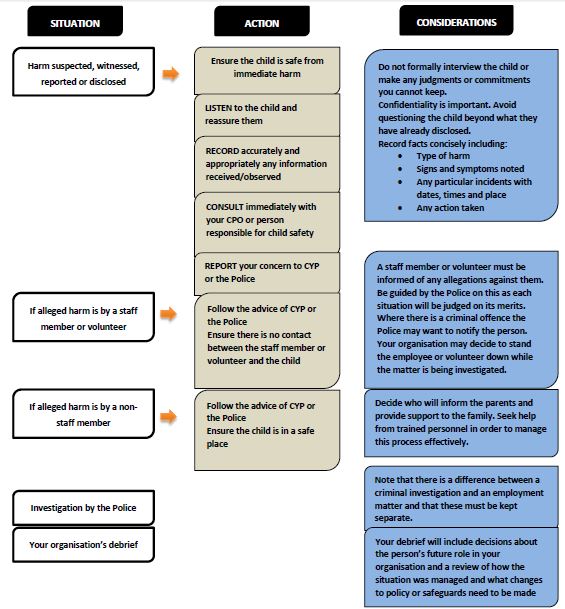
Responding to Suspected Harm in the Nature of Physical or Sexual Abuse
Alleged physical or sexual abuse is very serious and requires an immediate response. In responding to suspected physical or sexual child-abuse there are a few key principles that will be applied immediately:
- To ensure the child is safe from immediate harm. The welfare and interests of the child is the first thing to be considered.
- To immediately notify the Child Protection Officer or nominated person-in-charge.
- To respond and record suspected and actual incidences of reported harm accurately and appropriately, as soon as possible. Records should be factual (not opinion or hearsay), concise, and include:
i. the nature of the allegation.
ii. who noticed/disclosed the harm and their relationship to the child.
iii. details of any witnesses.
iv. signs and symptoms noted (including behavioural change).
v. any particular incidents with dates, times and places (if possible).
Other Considerations
The Foundation may consider a range of other factors that may be relevant when managing a potential-harm situation including:
- Managing sensitivities, conflicts and stress between members, families and officials.
- Managing the rights of alleged offenders by following a robust and fair process.
- Managing media interest by seeking professional assistance if required.
Support the Child and the Family Should a Child be Harmed
If a child experiences harm during our sports activities, the United Community Foundation is committed to offering comprehensive support to both the child and their family. The Foundation prioritizes the well-being of all participants and will ensure that the necessary measures are taken to provide care, assistance, and appropriate resources to address any concerns and facilitate recovery.
Where the harm or suspected harm is serious, Child, Youth and Family and the Police will be key agencies to contact. Below are some of the other agencies and organisations that can provide support:
- ACC by providing financial support where a child has been physically harmed, or by providing approved counsellors for children who have been sexually abused.
- Citizen’s Advice Bureau by providing details of local crisis counselling services.
- Child Matters is a registered charitable trust that provides training programmes, seminars and workshops on child harm, as well as advice and resources.
- Jigsaw Family Services is a national organisation focused on the wellbeing of New Zealand children and their families.
- KidsLine is New Zealand’s only 24-hour helpline for children and provides trained counsellors.
- Youthline is a free telephone counselling service for young people (aged 12-18 years).
- Iwi Social Services By providing social services run by iwi, hapu and Māori organisations working with people in their rohe (tribal area).
Allegations or Complaints that are Frivolous or Malicious
There may be some instances where an allegation or complaint is made that, after investigation, is found to be frivolous or malicious. Should this occur, the Foundation may take action against the person(s) who made the complaint. The degree of actions or penalties taken will be proportionate to the seriousness of the incident, ranging from achieving a satisfactory mediated resolution to dismissal or referral of the matter to a relevant authority.
Potential Disciplinary Outcomes
In the event of a reported misconduct, the outcome of the investigative process may vary depending on the findings. Possible outcomes can include:
- a satisfactory mediated outcome.
- disciplinary action imposed for a breach of this policy.
- no action taken due to a finding of ‘no breach of the policy’ or insufficient evidence.
- action against the complainant (or other person) due to a finding of frivolous, vexatious or malicious allegation.
- referral to another agency.
Actions or penalties that could potentially result from a breach of the policy include:
- verbal warnings.
- written warnings.
- suspension of a person from a role they hold with the Foundation.
- banning of a person from activities held by or sanctioned by the Foundation.
- a direction to complete a reasonable task i.e. letter of apology or corrective action.
- refer the matter to an appropriate authority i.e. Child, Youth and Family or Police.
Policy Review:
This Child Protection Policy is meticulously examined by the Board of Trustees, including the Child Protection Officer. The next policy review date is set annually on 21 January 2024, however, this policy may undergo more frequent reviews in cases of legislative changes or if specific concerns arise regarding the protection of children, necessitating immediate policy modifications. Any proposed changes to the policy require a two-thirds majority vote for ratification, ensuring that amendments are thoroughly considered and democratically approved.
Appendix 1: Process for Responding to Suspected or Disclosed Harm in the Form of Physical or Sexual Abuse.
 United Community Foundation