

Conducting a needs assessment is vital for the effective social inclusion of Māori refugees and migrants through sports programs. This process helps identify specific barriers they face and the cultural considerations essential for their participation and engagement. It also ensures that sports initiatives are tailored to foster a sense of belonging and respect for their unique cultural identities.
We begin with identifying the problem, then propose the solution, and finally we elaborate the required strategies to resolve the problem.
1- The Problem:
New Zealand, as identified by Stats NZ, is a mosaic of six primary ethnic groupings: Māori, Pacific peoples (Pasifika), Asian, Middle Eastern, Latin American, African (MELAA), European, and an array of other diverse ethnicities. This intricate tapestry is composed of numerous sub-groups, reflecting the country’s profound diversity. The migrant population in New Zealand is on the rise, currently standing at 27.4% of the population born overseas, with over 160 languages spoken throughout Aotearoa. This evolving demographic landscape, presents a formidable challenge to policymakers in maintaining and enhancing social cohesion.
The process of integrating refugees and migrants into their new societies is pivotal for enabling them to effectively rebuild their lives. Social inclusion is multi-faceted, encompassing the assurance of equal rights, the nurturing of connections and friendships, the provision of access to local employment and educational opportunities, and the availability of essential services like housing and healthcare. Such inclusion not only empowers individuals to fully participate in their communities but is also fundamental to fostering peaceful societies.
The path to social inclusion is paved with solidarity, recognizing our shared human experiences over our differences. Yet, this journey becomes complex in societies where cultural, religious, or ethnic differences lead to the marginalization of certain groups. Such exclusion significantly hinders refugees and migrants from participating in the socio-economic and political fabric of their host communities, posing a substantial challenge that requires both recognition and proactive intervention to cultivate inclusive environments beneficial to both newcomers and host societies.
In the realm of sport and recreation, these activities are acknowledged as potent vehicles for promoting social inclusion among refugees, migrants, and host societies. Data reveals a disparity in sport participation, where individuals born in non-English speaking countries, particularly women, are less likely to engage in sport and physical recreation compared to those born in New Zealand. This discrepancy is compounded by financial barriers, often placing club and representative sports beyond the economic reach of both refugee and non-refugee families. Notably, the financial strain intersects with other settlement priorities, such as language acquisition, housing, employment, and trauma recovery, relegating sports and recreation to a lower priority. This situation often leads to reduced parental support for children’s involvement in sports programmes, further impeding their engagement in recreational activities.
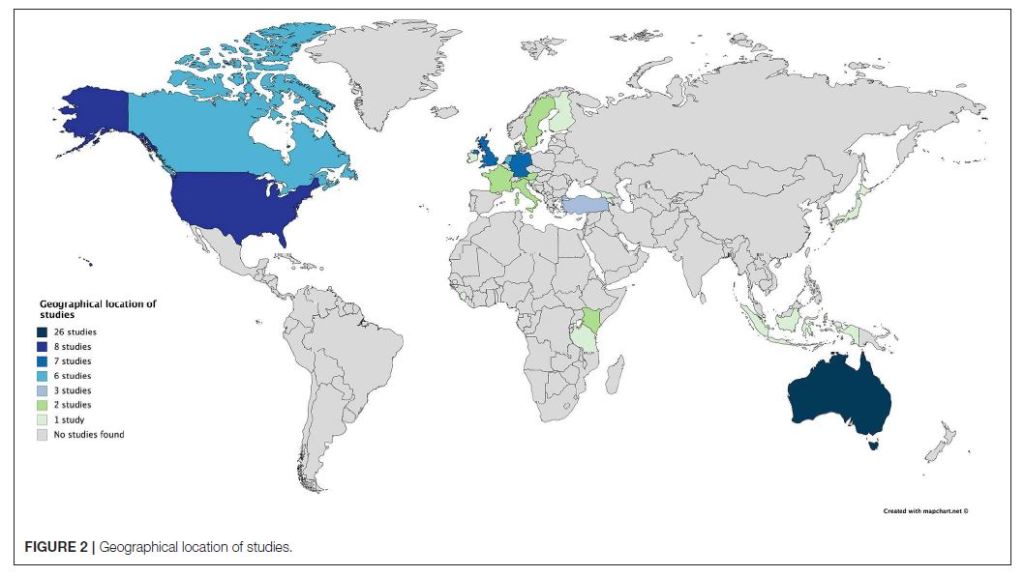
When examining the global context, there is a notable deficiency in research on the role of sport and recreation in facilitating social inclusion for refugees and migrants. Australia stands out, contributing to nearly one-third of the existing research in this domain, which underscores its commitment to understanding the role of sports in strengthening social inclusion. In stark contrast, New Zealand has yet to make significant contributions to this field, indicating an area that requires more focused attention and exploration. The accompanying map visually represents the varied levels of research contributions from different countries on this topic, highlighting the global landscape of understanding in this area.
In brief, factors preventing refugees and migrants from engaging in sports and recreation can be summarized with the following:
- Parental Support:
- Limited priority given by newly arrived parents.
- Other priorities such as housing, education, and employment take precedence.
- Competitiveness:
- Perception of club sports as highly competitive.
- Skill and dedication required for acceptance.
- Cost:
- Membership and equipment expenses act as significant barriers.
- Financial constraints for newly arrived migrant families.
- Priorities:
- Academic excellence and school dedication prioritized, especially among young multicultural individuals.
- Family and religious commitments take precedence over sports participation.
- Awareness:
- Sport clubs need improvement in managing cultural sensitivities.
- Particularly towards women, with a need for better understanding.
- Intimidation:
- Multicultural audiences may feel unwelcome or intimidated in sport clubs.
- Perception of clubs’ social culture revolving mainly around alcohol.
- Language:
- Limited access to key sport information for multicultural communities.
- English not being their first language poses a barrier.
- Trauma:
- Young people from refugee backgrounds may face various traumatic experiences.
- These include torture, persecution, abuse, loss, and prolonged periods in refugee camps, transit countries, and detention centres.
- Racism:
- Fear associated with experienced or perceived discrimination and racism directed towards refugees and migrants.
On the flip side, the situation regarding Māori participation in sports and recreation mirrors that of refugees and migrants. As of June 30, 2023, New Zealand’s estimated Māori ethnic population stood at 904,100, constituting 17.3% of the national population, and this Māori population is projected to grow to 1-1.18 million by 2038. Among them, there were 450,200 Māori males and 453,900 Māori females. The median ages for Māori males and females were 25.8 and 27.9 years, respectively, in contrast to the national median ages of 37.0 and 39.0 years, reflecting a younger Māori population. Despite this increasing population, Māori face significant disparities in health outcomes, with higher rates of various health conditions and chronic diseases, including cancer, diabetes, cardiovascular disease, and asthma, compared to non-Māori. The cost of these health inequalities is substantial for Māori and the healthcare system.
One of the key factors necessitating the attention to health issues among Māori is a lower level of physical activity. Research conducted by Sport New Zealand in 2015 validates that while Māori have historically played a significant role in sports and recreation, their participation has declined over time. This trend, among others, underscores the evolving needs of Māori and the necessity for proactive responses within the sports and recreation sector to foster growth and improvement.
It has long been assumed that Māori, owing to their physical prowess, prioritize sports as their primary means of physical activity. In reality, activities such as walking, swimming, and fishing remain the primary modes of engagement in play, active recreation, and sports for Māori. The misconception surrounding Māori desires, needs, and aspirations in these areas poses a challenge for Sport New Zealand in terms of comprehending these nuances and crafting appropriate solutions through suitable channels.
Moreover, while existing literature acknowledges the persistent high levels of deprivation and inequality among Māori, it is essential to recognize that the underlying causes of this deprivation over the past three decades have been rooted in the pragmatic shortcomings of the New Zealand system, particularly in its failure to honor Te Tiriti o Waitangi. Given that Māori constitute a significant demographic within the sports and recreation sector, with a large youth population, it becomes imperative to consider Māori needs both in the present and in the future. This consideration is crucial for the holistic development of the sector.
2- The Solution:
Shared sport projects for Māori, refugees and migrants brings numerous benefits, documented across physical, mental, and social domains. Physically, it improves fitness and reduces the risk of chronic diseases, while mentally; it boosts self-esteem and mitigates stress and depression. Socially, engagement in sports contributes to crime reduction, counters anti-social behavior, and improves social cohesion. Beyond health, sports offer purpose for young people recovering from refugee traumas or racism impacts. The activity facilitates social interaction, providing a platform for non-English speakers to learn and practice the language. Importantly, sports break down cultural barriers, improving connections between diverse ethnic and language groups. By building trust within Māori, refugees and migrants communities and bridging gaps with the broader community, sports serve as an entry point for the above groups to actively participate in community life, making it an effective tool against racism.
The initiative of United Community Foundation, (UCF), is somehow different with all other current and previous projects as it aims to develop social inclusion among Māori, refugees, migrants, and other locals through sports and recreation. UCF recognizes the significance of Maori culture as the indigenous people of New Zealand and is committed to breaking down barriers to sports and recreation participation within this community. It is often observed that some Māori may be reluctant to engage in sports activities or may face limited access to them. Therefore, one of UCF’s key initiatives is to facilitate the active involvement of Māori alongside refugees and migrants through sports and recreation programs.
By fostering an environment where Māori, refugees, and migrants come together in shared sports and recreational activities, UCF aims to achieve social inclusion and cohesion as well. This initiative serves as a bridge, bringing together diverse communities to create bonds, friendships, and mutual understanding. To make this vision a reality, UCF recognizes the importance of collaborating closely with Maori groups and non-governmental organizations (NGOs). These collaborations will allow us to explore the most effective and culturally sensitive approaches to engage Māori in our sports and recreation initiatives. Initial contact has already been established by UCF with Maori groups and programmes like “He Oranga Poutama” through Aktive, and we are eagerly awaiting their responses. Through this collaborative effort, we aim to create a welcoming and inclusive space where Māori, refugees, migrants, and other participants can not only take part in sports and recreation but also celebrate their rich cultural diversity and heritage, developing unity and understanding among all members of the community.
On the other hand, engaging Māori, migrants and refugees in sports and recreational activities not only improves social inclusion but also serves as a powerful preventive measure against mental and physical illnesses such as depression and obesity. These activities provide a supportive community, promote physical well-being, and offer a constructive outlet for stress, contributing to improved mental health. By investing in these preventive initiatives, governments can potentially reduce the burden on mental health treatments and consultations, leading to long-term savings in healthcare expenditures and fostering a healthier and more resilient population.
Recognizing the critical nexus between sport, recreation, and social inclusion for refugees and migrants, UCF places a strategic emphasis on academic research in this domain. Investing in these studies is imperative for raising a deeper understanding of the transformative impact sports can have on the lives of displaced and local individuals. By allocating a portion of its resources to such research endeavors in following years, UCF aims to contribute valuable insights that not only enhance the organization’s programmes but also advance the broader discourse on creating inclusive spaces for refugees and migrants through sports and recreation.
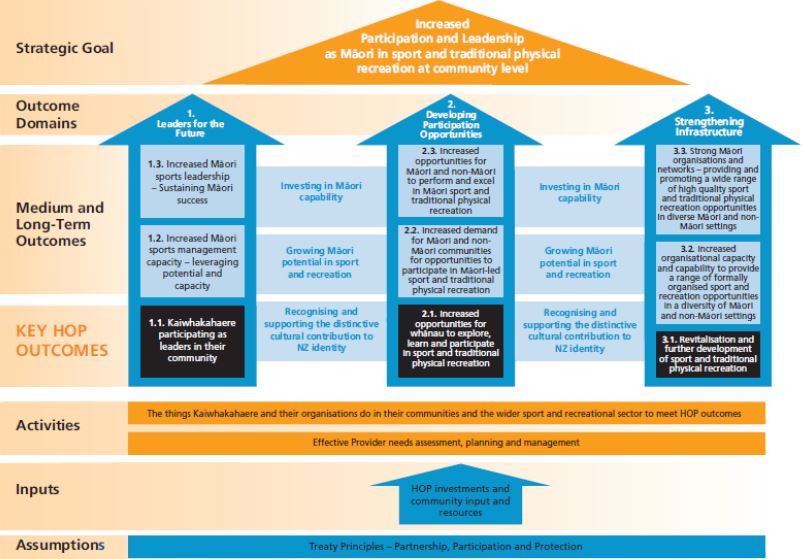
Encouraging multicultural engagement in sports and recreational activities involves addressing specific considerations. People from diverse backgrounds participate in sports for common reasons such as enjoyment, physical activity, socializing, and skill development. As per below diagram, these engagements are in line with He Oranga Poutama’s strategic programmes for Māori as well:
To improve participation among multicultural communities, several strategies can be employed:
1- Supporting Settlement: Participation in sports aids newly-arrived migrants and refugees in settling by connecting them with the local community and improving English language skills.
2- Flexible or Low Fees: Attract multicultural communities by offering free or low-cost introductory periods, activities, memberships, and flexible payment options.
3- Culturally Appropriate Approach: Encourage involvement by recognizing cultural diversity, providing culturally appropriate programmes, and using language-sensitive promotional resources. Offer information in languages spoken by local multicultural communities.
4- Social and Fun Aspects: Ensure clubs offer non-competitive playing options, social activities, and opportunities for interaction with people from their own and other cultural groups. This can include organizing or participating in ethnic festivals and events.
5- Involvement in Decision Making: Including individuals from multicultural communities in the planning and delivery of programmes. Establish connections with local community organizations and cultural leaders.
6- Culturally Considerate Food: Make multicultural participants feel welcome and valued by offering food and beverage options reflecting the needs, preferences, and traditions of different cultures. For example: providing Halal for Muslims or Kosher for Jews and considering vegetarian preferences as well. Involve multicultural community members in preparing traditional foods for social functions.
Multicultural communities may face obstacles in accessing sports, but specific programmes like Fusion (implemented in locations such as Hamilton, Palmerston North, Porirua, and Lower Hutt) and Sport Plus (accessible through WINZ or Youth Inspire referrals) have successfully facilitated some of the targeted groups’ access to sports and recreation. These initiatives, including future programmes by UCF, should be expanded throughout Auckland region. The overarching goal is to establish a safe and welcoming environment for individuals from all diverse cultural backgrounds.
- The Need:
Before establishing UCF, we conducted extensive research to identify the issue and if any specific programme, NGOs or charitable trusts in Auckland dedicated exclusively to promoting Māori, refugees and migrants’ social inclusion through sport and recreation. While most organizations were involved in various activities, only a small portion addressed this specific need, which appeared insufficient. Motivated by the evident gap, we conceived the idea of registering UCF, aiming to create a dedicated charity committed to achieving the goal of fostering social inclusion among Māori, refugees and migrants through sports and recreational activities in Auckland.
Therefore:
As per “Report-back on Improving Social Inclusion”, 22 June 2020, and below clauses, United Community Foundation, NZBN: 9429051799441, was established on 20 December 2023:
1- Clause 5: “After the 15 March Terror Attack, calls came for the Government to consider initiatives to support social inclusion in communities around New Zealand. There were, and still continue to be, other reasons to undertake work to improve social inclusion in New Zealand.”
2- Clause 55 in regards to New Zealand Bill of Rights Act 1990 and the Human Rights Act 1993: “The Human Rights Commission was established to advance social inclusion, harmonious relationships between communities and the human rights of everyone in New Zealand.”
3- Clause 18 of Appendix 1: “Additional funding from Budget 19 has enabled MSD’s E Tū Whänau initiative (and new five-year strategy) to expand work with families from diverse backgrounds. This work focuses on building protective factors and supporting families from migrant and former refugee backgrounds to create positive futures within their New Zealand communities. This includes a strong focus on youth leadership and capability development, within each community, and also as part of a multi-ethnic youth strategy with Māori and Pacific rangatahi.”
 United Community Foundation